
Royalty-Free Music Explained: What Creators Need to Know
Understanding royalty-free music licensing can save you from copyright nightmares. Here's everything creators need to know about legal music use.
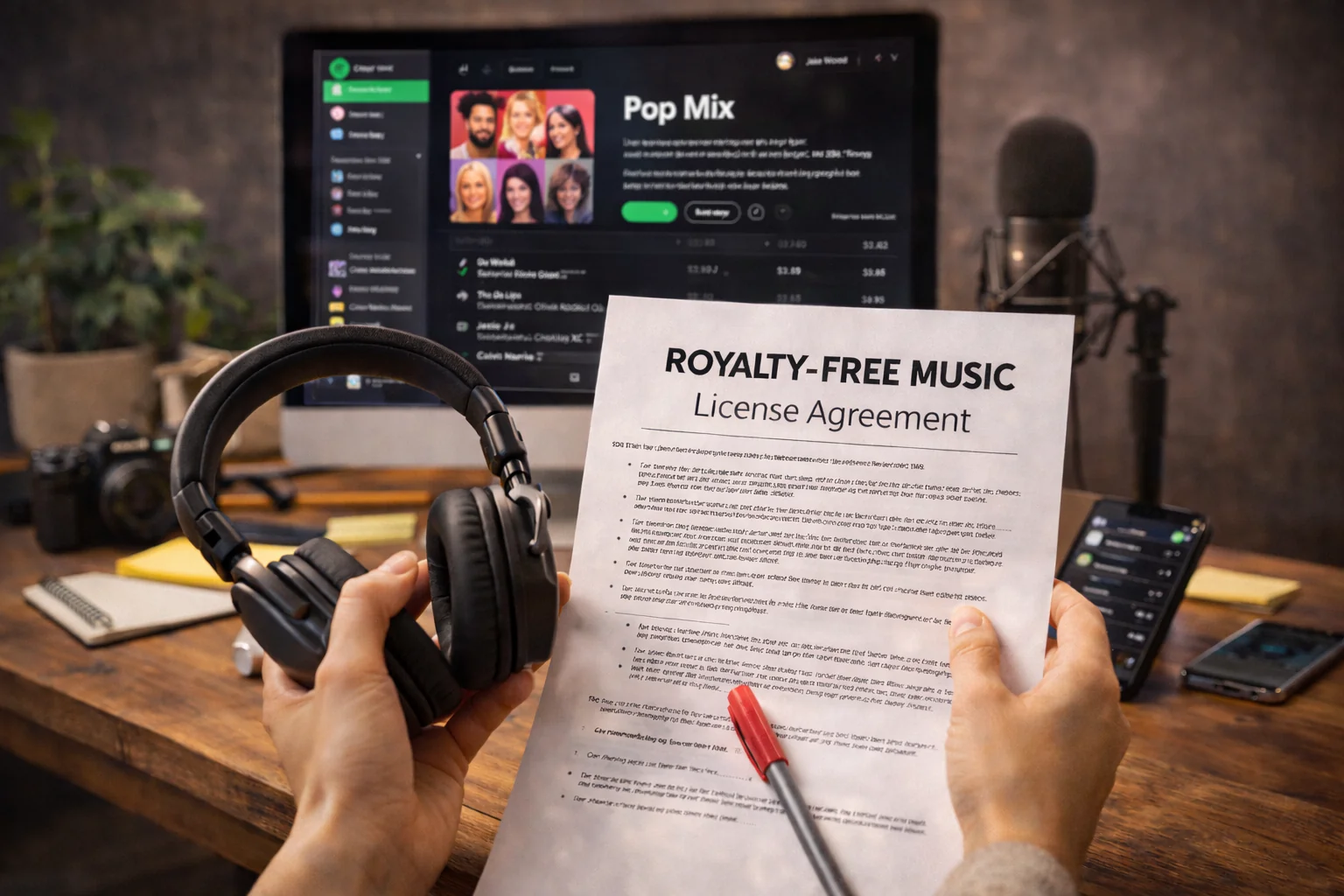
Royalty-free music is everywhere, but most creators don't fully understand what it means. Let's break it down completely - no legal jargon, just practical facts.
What "Royalty-Free" Actually Means
Here's the confusion: "royalty-free" doesn't mean "free." It means you pay once and don't owe ongoing royalties (recurring payments) to use the music.
Think of it like buying a book vs. renting one. You pay once, own it forever, and can read it unlimited times without additional payments.
What You're Actually Buying
You're purchasing a license (permission to use), not the copyright (ownership of the music itself). The distinction matters:
- License: Right to use the music in your content
- Copyright: Ownership of the actual music (stays with the creator)
Types of Royalty-Free Licenses
Standard/Non-Exclusive License
Multiple creators can license the same track. It's affordable (often $1-10) and covers most creator needs. You can use it in unlimited projects, but others can license it too.
Perfect for: YouTube videos, social media content, podcasts, personal projects
Exclusive License
You're the only person who can use that track. Once you buy it, it's removed from the library. More expensive ($25-100+) but guarantees uniqueness.
Perfect for: Brand videos, signature content, podcasts intros, content where you want audio recognition
Common Misconceptions
Myth: "Royalty-Free = Free"
Reality: You still pay for the license. "Free" refers to no ongoing royalties, not zero cost.
Myth: "I Can Use It Anywhere, Forever"
Reality: Yes, but read your license agreement. Some have restrictions on:
- Reselling or redistributing the music
- Using in templates or products you sell
- Number of views/impressions (rare but exists)
Myth: "Attribution Isn't Required"
Reality: Depends on the license. Most paid royalty-free music doesn't require attribution. Free music libraries usually do. Always check.
Royalty-Free vs. Copyright-Free
These aren't the same:
- Copyright-Free: Music in the public domain. Truly free, no restrictions. Usually very old music or explicitly released by creators.
- Royalty-Free: Still copyrighted, but licensed for use. You need to purchase the license.
What Your License Typically Covers
A standard royalty-free license usually includes:
- Commercial use: Make money from content using the music
- YouTube monetization: Earn ad revenue
- Social media: Instagram, TikTok, Facebook, etc.
- Podcasts: Including sponsored episodes
- Client work: Use in projects you create for clients
- Multiple projects: Use the same track in different videos
What It Usually Doesn't Cover
- Reselling or redistributing the music file itself
- Using in music streaming services (Spotify, Apple Music)
- Creating derivative works (remixing, sampling)
- Transferring rights to others
Platform-Specific Considerations
YouTube
Content ID is the big concern. Properly licensed royalty-free music won't trigger claims. Always keep your license certificate as proof.
Instagram/TikTok
These platforms have their own music libraries, but they're limited and often don't work for business accounts. Royalty-free music solves this.
Podcasts
Podcast platforms typically don't have content ID systems, but you still need proper licensing. Sponsors care about this.
Client Work
If creating content for clients, ensure your license covers commercial use. Some require extended licenses for this.
Proving Your License
Always keep:
- Receipt/invoice of purchase
- License certificate (if provided)
- Download confirmation
- License terms document
If you receive a copyright claim (rare but possible), you'll need these to dispute it.
When to Go Royalty-Free
Choose royalty-free when:
- You're making money from your content
- You want legal certainty
- You need professional-quality music
- You're building a long-term channel/brand
- You work with clients or sponsors
Free vs. Paid Royalty-Free
Free Royalty-Free Libraries
Pros: No cost, large selection
Cons: Often requires attribution, limited commercial use, everyone uses the same tracks
Paid Royalty-Free Libraries
Pros: Better quality, no attribution needed, full commercial rights, unique tracks
Cons: Costs money (though platforms like Musiqueen start at just $1)
Red Flags to Watch For
- Unclear licensing terms
- "Free" music with hidden restrictions
- Platforms that don't provide license certificates
- Music that seems too good to be true (might be stolen)
The Bottom Line
Royalty-free music is an investment in your content's longevity. Spending $1-10 per track prevents:
- Copyright strikes
- Demonetization
- Taken-down videos
- Legal issues
- Lost revenue
As your channel grows, proper licensing becomes even more important. Start right from the beginning, and you'll never worry about music-related problems.
At Musiqueen, we make it simple: clear licenses, commercial use included, certificates provided, starting at $1. No confusion, no hidden restrictions, just legal music for your content.